Emergency Callout
  Get in Contact
  Get Your Free Quote
 Choosing the right door system for a commercial building is about far more than aesthetics. Doors play a vital role in safety, security, durability, compliance, and long-term maintenance costs. One of the most common comparisons is between steel set doors and traditional timber doors.
Both options have their place in the building industry. Timber has been used for centuries and remains a familiar choice in many buildings. However, steel set doors have become increasingly common across commercial, industrial, and public sector projects due to their durability and performance in demanding environments.
A Brief History of Steel Set Doors
While timber doors have been used in construction for thousands of years, steel set doors are a relatively modern innovation that emerged alongside the growth of industrial construction in the late 19th and early 20th centuries.
As factories, railway buildings, and large public facilities expanded during the industrial era, architects and engineers began seeking stronger, more durable alternatives to timber. Steel was increasingly used for structural components, and it was a natural progression to apply it to door systems as well.
By the early 1900s, steel set doors were being produced for industrial plants, warehouses, and infrastructure projects, where fire resistance and durability were critical. After major urban fires in Europe and North America highlighted the vulnerability of timber construction, demand for more fire-resistant building materials grew significantly.
Following the Second World War, steel door manufacturing expanded rapidly in the UK as part of the rebuilding of public buildings, hospitals, schools, and social housing. Advances in fabrication, coatings, and door hardware made steel doors more versatile and easier to install.
Today, steel set doors are widely used in commercial buildings, infrastructure projects, education facilities, healthcare environments, and industrial premises.
Industry standards and best practices are supported by organisations such as the Door and Hardware Federation, which provide guidance for manufacturers and installers working with steel door systems.
What is a Steel Set Door?
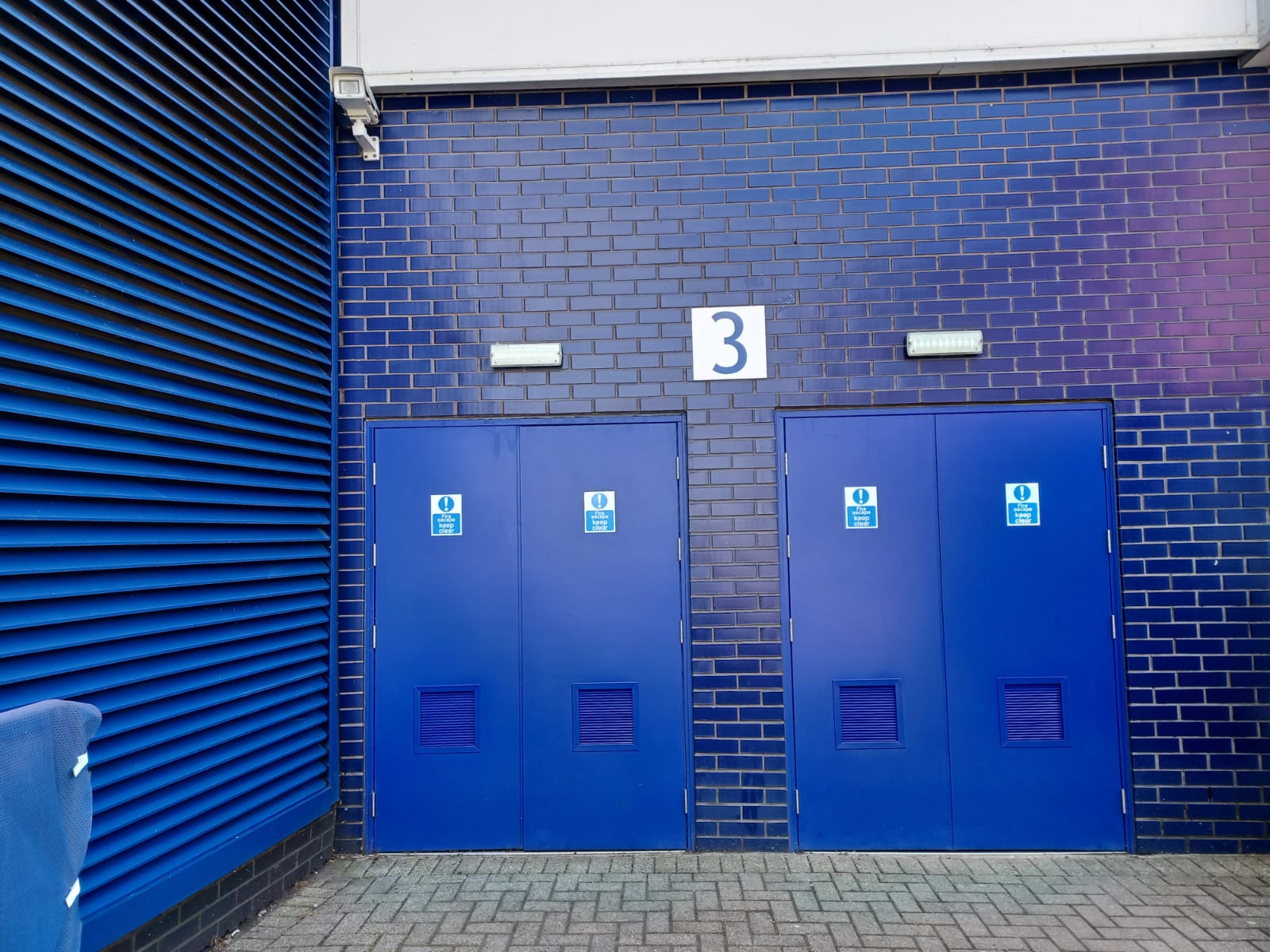
A steel set door typically consists of a steel door leaf mounted within a steel frame, forming a complete integrated system. These doors are usually factory manufactured and supplied as a pre-engineered unit designed for specific performance requirements.
Key characteristics often include:
- Welded or mechanically assembled steel frames
- Steel door leaves with reinforced cores
- Powder-coated or galvanised finishes
- Compatibility with commercial door hardware
- Fire, acoustic, or security ratings depending on specification
Steel doors are frequently used in plant rooms, service areas, warehouses, corridors, stairwells, and external entrances, where robustness and longevity are important considerations.
What is a Timber Door?
Timber doors remain widely used both in commercial and residential constructions. They are typically constructed using solid timber, engineered timber cores, or laminated timber structures, often with veneer or laminate finishes.
In commercial settings, timber doors are commonly found in:
- Offices
- Meeting rooms
- Hotels
- Healthcare facilities
- Educational buildings
Timber doors can be manufactured to achieve fire ratings and acoustic performance, and they offer flexibility in terms of finishes and interior design. However, their performance characteristics differ from steel doors in several important areas.
Durability and Lifespan
One of the most significant differences between steel and timber doors is their durability under heavy use.
Commercial buildings often experience high foot traffic, frequent door operation, and occasional impacts from equipment, trolleys, or deliveries. In these environments, steel doors are often chosen because they are highly resistant to:
- Impact damage
- Warping
- Splitting
- Surface wear
Steel doors are also less vulnerable to environmental conditions such as moisture or temperature fluctuations. Timber, by contrast, can expand or contract in response to humidity, which may lead to distortion or alignment issues over time.
While timber doors can perform well in lower-traffic environments, steel doors are often better suited to industrial or high-traffic areas where reliability is essential.
Fire Safety and Compliance
Fire safety is a critical factor in commercial building design. Doors must help compartmentalise fire and smoke to allow occupants to evacuate safely and limit damage to the structure.
Both steel and timber doors can be manufactured as fire-rated doors, but steels doors offer some inherent advantages.
Steel is a non-combustible material, which means it does not contribute fuel to a fire. Steel door sets are often designed and tested as complete assemblies to ensure they perform consistently under fire conditions.
Fire door testing in the UK and Europe is typically carried out in accordance with standards such as:
Specifying a door set that has been fully tested as a system can provide reassurance that it will perform as intended in a fire scenario.
Security Performance
Security is another major consideration in commercial and industrial buildings. Doors are often a primary point of access and must provide protection against unauthorised entry.
Steel set doors are naturally strong and can be reinforced with additional security features such as:
- Multi-point locking systems
- Reinforced hinge points
- Heavy-duty locking hardware
- Access control integration
Because the frame and leaf are both steel, the entire door set can be engineered to resist forced entry.
Timber doors can also achieve good security performance, but they may require additional reinforcement or specialist cores to match the strength of steel.
For building such as data centres, warehouses, and utility facilities, steel doors are often the preferred option due to their robust construction.
Maintenance Requirements
Maintenance is an important consideration for managers responsible for large commercial estates.
Steel doors generally require relatively low levels of ongoing maintenance, powder-coated or galvanised finishes provide protection against corrosion, and the structural rigidity of steel means doors are less likely to warp or distort over time. In many environments, routine checks of hinges, seals, locking mechanism, and door closers are enough to keep them functioning properly.
Timber doors, on the other hand, may require more frequent upkeep, particularly in environments exposed to moisture, temperature fluctuations, or heavy use. Timber can expand or contract with changes in humidity, which may affect alignment or closing performance. Surface finished may also require periodic repair or refinishing to maintain their appearance and protection.
Regardless of the material used, regular servicing is an important part of responsible building maintenance. In most commercial environments, doors should be inspected and serviced at least once per year, with more frequent checks recommended in high-traffic areas such as schools, hospitals, or busy commercial buildings.
When properly maintained and serviced, bot steel and timber doors can provide many years of reliable operation, although the inherent strength and durability of steel can make it particularly well suited to demanding commercial environments.
Cost Considerations
Initial cost is often a key factor in specification decisions.
Timber doors are sometimes less expensive upfront, particularly for interior applications. However, the total lifecycle cost of a door system can be significantly influenced by durability and maintenance.
Steel set doors may have a higher initial purchase price in some cases, but their longer lifespan and lower maintenance requirements can make them a cost-effective solution over the long term, particularly in demanding environments.
For large commercial projects, lifecycle cost analysis is increasingly used to assess the true value of different building components.
Sustainability and Environmental Impact
Sustainability is an increasingly important factor in building design and procurement.
Timber is often seen as renewable material, especially when sourced from responsibly managed forests. Certification schemes such as those supported by the Forest Stewardship Council help ensure sustainable forestry practices.
Steel also has strong sustainability credentials. It’s one of the most recyclable materials in construction, and steel products can be recycled repeatedly without losing structural integrity.
Choosing the Right Door for Your Project
Ultimately, the choice between steel set doors and timber doors depends on the specific requirements of the building.
Steel set doors and timber doors both play important roles in commercial construction. Timber continues to be widely used for interior applications, while steel doors have become increasingly common in environments where durability, fire performance, and security are crucial.
The developments of steel door systems over the past century reflects broader changes in the construction industry, with growing emphasis on safety, reliance, and long-term performance.
For many commercial buildings, particularly those with demanding operational requirements, steel set doors provide a reliable and robust solution that can deliver consistent performance over many years.
As building regulations, safety expectations, and sustainability goals continue to evolve, the careful specification of door systems will remain an essential part of successful commercial building design.