Emergency Callout
  Get in Contact
  Get Your Free Quote
 In fast-paced industrial and commercial environments, efficiency is of vital importance. From logistics hubs to food production facilities, businesses are constantly looking for ways to improve productivity, reduce costs, and maintain strict environmental controls. One increasingly popular solution is the installation of fast action doors - also commonly known has high-speed doors.
Understanding High-Speed Industrial Doors
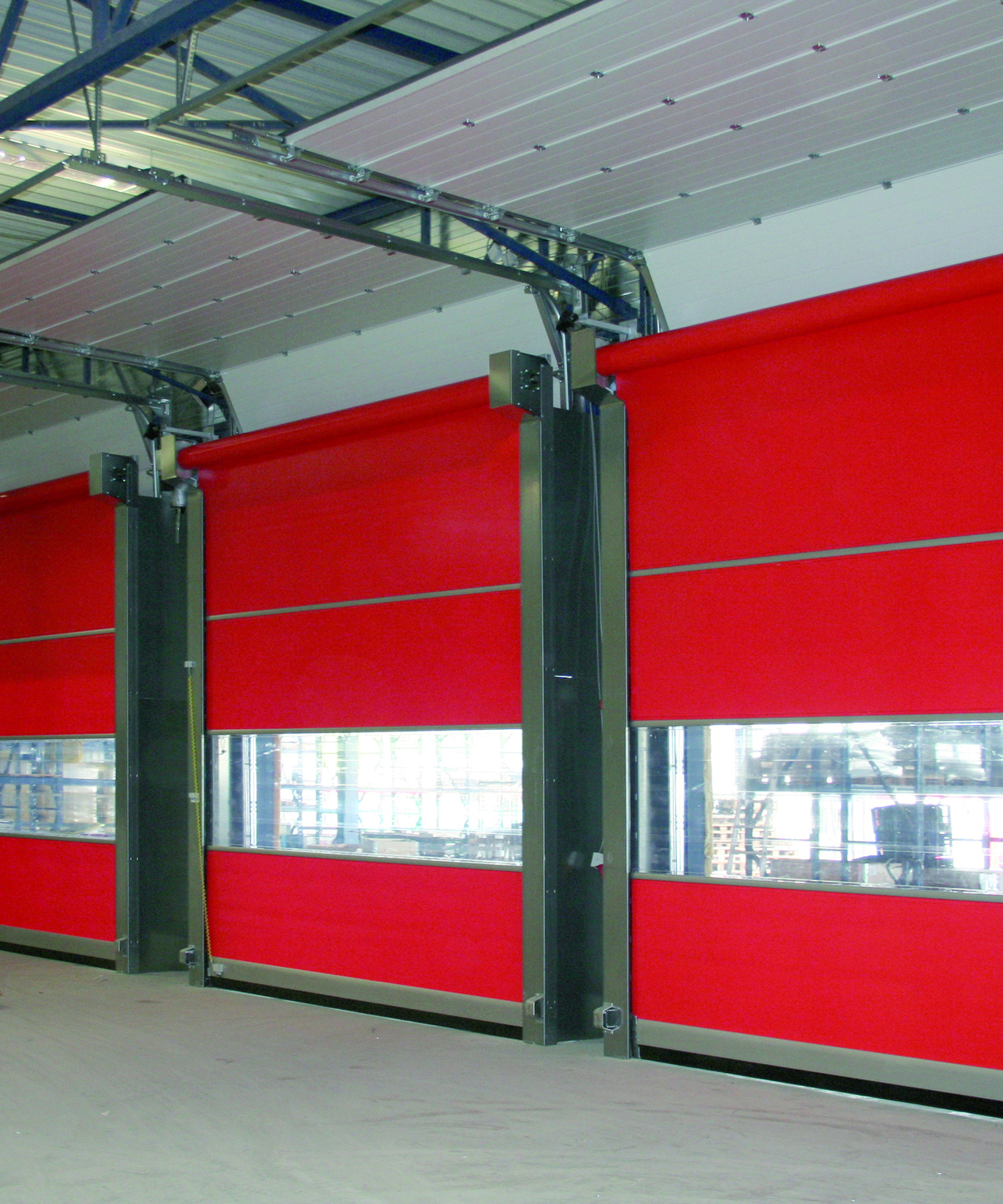
High-speed doors are motorised door systems designed to open and close at significantly faster speeds than traditional roller shutters or sectional doors. Typically operating at speeds exceeding 0.5 metres per second in the UK and Europe, these doors are engineered for high-frequency use and rapid access.
Often referred as fast action doors, rapid roll doors, or speed doors, they are widely used in industrial and commercial environments where quick access, temperature control, and workflow efficiency are critical.
Unlike conventional doors, which may take many seconds to open and close, high-speed doors can complete a cycle in just a few seconds. This makes them ideal for high-traffic areas where delays can impact operations.
At their core, fast action doors are designed to:
- Improve traffic flow
- Reduce energy loss
- Maintain environmental conditions
- Enhance workplace safety
Where Did High-Speed Doors Originate From?
High-speed doors evolved from traditional roller shutter systems, which have been used in industrial setting for decades. As industries modernised and automation became more prevalent, the limitations of slower doors became increasingly apparent.
Manufacturers began developing enhanced door systems capable of higher cycle rates, faster opening speeds, and improved durability. Today’s high-speed doors are considered a technical evolution of roller shutters and sectional doors, incorporating lightweight materials, advanced motors, and intelligent control systems.
With the rise of sectors such as cold chain logistics, pharmaceuticals, and e-commerce fulfilment, demand for fast action doors has grown rapidly across the UK.
How Do Fast Action Doors Work?
Fast action doors typically operate using a powered motor that drives a flexible curtain (often made from PVC or similar materials) vertically or horizontally. The curtain rolls, folds, or slides into a compact housing when opened.
Key components include:
- High-speed motor and control system
- Flexible curtain or rigid slats
- Safety sensors
- Guide tracks and frame
- Activation systems
Depending on the design, doors may open vertically (roller), horizontally (sliding), or fold to the side.
Many modern systems are also automated, allowing seamless integration with warehouse management systems or vehicle detection technology.
Types of High-Speed Doors
There are several types of fast action doors available, each suited to different applications:
- Rapid roll doors - The most common type, using a flexible curtain that rolls vertically
- Folding high-speed doors - Ideal for large external openings
- Insulated high-speed doors - Designed for temperature-controlled environments
- Cleanroom doors - Used in pharmaceutical or laboratory settings
- Freezer doors – Built for cold storage and chilled environments
What Are the Main Benefits of High-Speed Industrial Doors?
Improved Operational Efficiency
One of the primary advantages of high-speed doors is the ability to streamline movement within a facility. Faster opening and closing cycles reduce waiting times for staff, forklifts, and vehicles, significantly improving workflow.
In high-traffic environments, this can translate into measurable productivity gains.
Energy Efficiency and Cost Savings
Fast action doors minimise the amount of time an opening is exposed to external conditions. This reduces heat loss in winter and prevents warm air entering cooled environments in summer.
As a result, businesses can see significant reductions in heating and cooling costs, particularly in temperature-controlled facilities.
Enhanced Temperature and Environmental Control
Maintaining consistent environmental conditions is critical in sectors such as food production and pharmaceuticals. High-speed doors help prevent:
- Air exchange
- Dust and contamination
- Humidity fluctuations
This makes them essential for cleanrooms, cold stores, and hygiene-sensitive environments.
Increased Safety
Modern fast action doors are equipped with advanced safety features, including:
- Motion sensors
- Safety edges
- Automatic reversal systems
These features help reduce the risk of accidents, particularly in busy industrial settings with forklift traffic.
Reduced Maintenance and Long-Term Reliability
High-speed doors are designed for frequent use, often handling hundreds of cycles per day. Their durable construction and self-repairing features (in some models) reduce maintenance requirements compared to traditional doors.
Typical Installation Time
One of the most common questions from businesses is: how long does it take to install a high-speed door?
The answer depends on several factors, including door size, type, and site conditions. However, in most cases:
- Standard installations can be completed within 1-2 days
- Complex or large-scale installations may take several days
- Custom integrations (automation, sensors, specialist environments) may extend timelines
Because fast action doors are often bespoke, a site survey is typically required before installation begins. Professional installers will assess structural requirements, power supply, and operational needs to ensure optimal performance.
Which Industries Benefit Most From Fast Action Doors?
High-speed doors are used across a wide range of industries in the UK. Their versatility makes them suitable for both internal and external applications.
Logistics and Warehousing
Distribution centres and warehouses rely on efficient movement of goods. Fast action doors reduce bottlenecks and improve turnaround times, particularly in high-volume operations.
Food and Beverage Manufacturing
In food production environments, hygiene and temperature control are critical. High-speed doors help maintain clean conditions and prevent contamination.
Pharmaceuticals and Cleanrooms
Cleanrooms environments require strict control over air quality and pressure. Fast action doors support these requirements by minimising air exchange.
Cold Storage and Refrigeration
Cold stores benefit significantly from high-speed doors, as they help maintain low temperatures and reduce energy consumption.
Automotive and Manufacturing
Factories and workshops often experience high levels of internal traffic. Fast action doors improve efficiency while protecting against dust, noise, and environmental factors.
Retail and Commercial Premises
In some cases, high-speed doors are also used in large retail or commercial setting where rapid access and security are important:
Common installation locations include:
- Warehouses
- Factory floors
- Laboratories
- Vehicle depots
- Storage facilities
Trade Bodies and Standards in the UK
When investing in high-speed doors, it’s important to work with suppliers who adhere to recognised industry standards and trade bodies.
In the UK and Europe, key organisations include:
• Door & Hardware Federation (DHF) - Represents manufacturers and installers of industrial doors and sets safety and compliance standards
• BSI Group - Develops standards such as BS EN 13241, which applies to industrial doors
• Health and Safety Executive (HSE) - Provides guidance on workplace safety, including powered doors
Compliance with these organisations ensures that high-speed doors meet safety, performance, and legal requirements.
Are High-Speed Doors Worth the Investment?
While the initial cost of fast action doors can be higher than traditional roller shutters, the long-term benefits often outweigh the investment.
Businesses typically see returns through:
- Reduced energy bills
- Increased productivity
- Lower maintenance costs
- Improved safety and compliance
In high-demand environments, the operational gains alone can justify the upgrade.
High-speed industrial doors are no longer a niche solution - they are becoming a standard feature in modern UK industrial and commercial facilities.
By combining speed, durability, and intelligent design, fast action doors / high-speed doors help businesses operate more efficiently while maintaining control over their environment.
Whether you’re running a warehouse, manufacturing plant, or temperature-controlled facility, investing in high-speed doors can deliver tangible benefits in the short and long term.
As industries continue to evolve and demand faster, more efficient processes, the role of high-speed doors will only become more important in the years ahead.