Emergency Callout
  Get in Contact
  Get Your Free Quote
 Automatic doors are now a standard feature across commercial buildings in the UK. From retail entrances to hospitals and transport hubs, they provide convenience, accessibility, and an improved customer experience.
How long should an automatic door last depends on several factors, including the type of door, how heavily it is used, and, most importantly, how well it is maintained. While automatic doors are built for durability, they are still mechanical and electronic systems that require ongoing care to perform at their best.
Typical Lifespan of Automatic Doors
In general terms, a well-installed and properly maintained automatic door can be expected to last somewhere between 10 and 20 years. This range reflects variations in product quality, environmental conditions, and usage levels.
Lower-end estimates tend to apply to high-traffic environments where doors are in near constant use, while well-maintained systems in quieter location can exceed expectations.
It’s also worth noting that the lifespan of an automatic door isn’t just about whether it still opens and closes. Over time, components wear down, efficiency reduces, and compliance standards evolve. At a certain point, replacement becomes more cost-effective than continued repair.
What Are the Different Types of Automatic Doors?
The type of automatic door installed plays a significant role in how long it is likely to last.
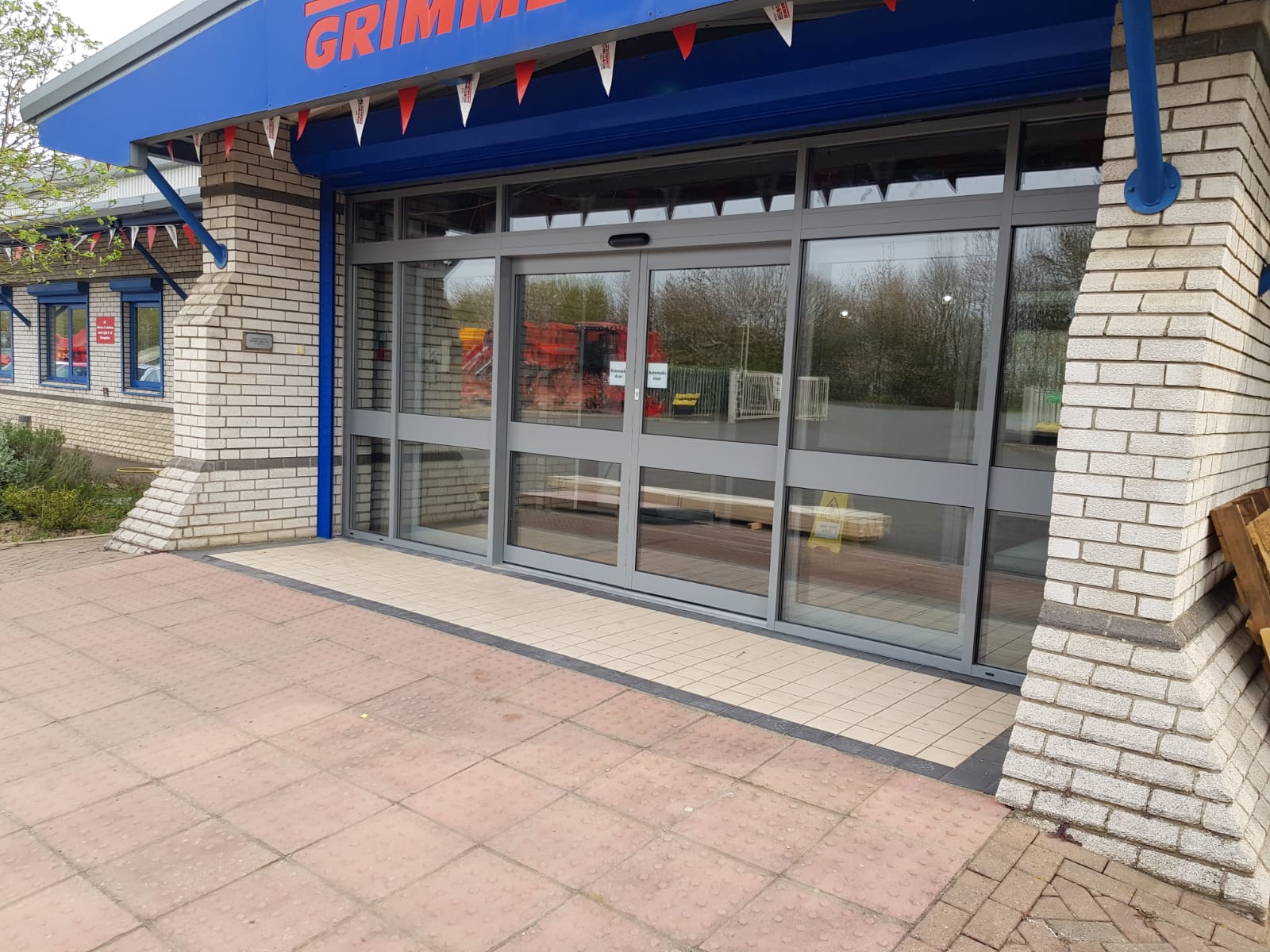
Automatic sliding doors are among the most common in commercial environments such as supermarkets, airports and hospitals. They operate on a track system and are designed to handle high footfall. However, due to the frequency of operation, they typically have a life span towards the lower end of the spectrum, often around 8 to 12 years before major refurbishment or replacement is required.
Automatic swing doors, which open inward or outward on hinges, are often found in office buildings and smaller commercial premises. They can be either low-energy or full-power systems. Because the mechanism is slightly simpler than sliding doors, they can last longer, often around 10 to 15 years, assuming regular servicing is carried out.
Automatic revolving doors are a different category altogether. Often seen at hotels, corporate headquarters, and high-end commercial buildings, they are designed to manage high traffic while maintaining energy efficiency. Their robust construction means they often achieve lifespans closer to 15 to 20 years, provided that their mechanical and safety systems are maintained.
There are also more specialised door types, such as telescopic door and hermetically sealed doors used in healthcare environments. These are engineered for specific applications and can vary widely in lifespan depending on usage and maintenance.
What Influences the Lifespan of Automatic Doors?
While the type of doors provides a general benchmark, the actual lifespan of an automatic door is heavily influenced by how it is used and maintained.
High traffic environments naturally place more strain on door mechanisms. A door at a busy retail entrance may operate thousands of times per day, which accelerates wear on motors, sensors, and moving parts. In contrast, a door in a low traffic office setting will experience significantly less stress and therefore last longer.
Environmental factors also play an important role. Doors exposed to harsh weather conditions, such as those at external entrances, may suffer from moisture ingress, corrosion, or temperature related wear. Similarly, doors in industrial environments may be exposed to dust, dirt, or debris, all of which can impact performance over time.
However, the single most important factor affecting lifespan is maintenance.
The Importance of Servicing and Maintenance
Automatic doors require regular servicing to ensure they continue to operate safely and efficiently. Without proper maintenance, even the highest quality door systems will deteriorate prematurely.
Routine servicing involves inspecting mechanical components, checking sensors and safety systems, cleaning tracks, and ensuring that all moving parts are properly aligned and lubricated. Over time, small issues such as worn components or slights misalignments can develop. If left unaddressed, these can lead to more serious faults or even complete system failure.
Regular servicing does more than just help extend the lifespan of the door. It also ensures compliance with UK safety standards and reduces the risk of accidents. In the UK, standards such as BS EN 16005 set out requirements for the safe operation of pedestrian doors, and adherence to these standards is closely linked to ongoing maintenance.
From a business perspective, preventative maintenance is also far more cost effective that reactive repairs. Identifying and resolving minor issues early can help avoid expensive breakdowns and reduce operational downtime.
Where Are Automatic Doors Used?
Automatic doors are used across a wide range of sectors in the UK, each with its own requirements and operational demands.
In retail environments, automatic doors are a key part of the customer experience. They provide ease of access for shoppers and help manage high volumes of foot traffic. For large supermarkets and shopping centres, reliability is crucial, as any downtime can have a direct impact on revenue and customer satisfaction.
Healthcare settings rely heavily on automatic doors to support hygiene, accessibility, and efficient movement of patients and staff. In hospitals and clinics, doors must operate reliably and often need to meet hygiene and safety requirements.
Transport hubs such as airports and train stations depend on automatic doors to manage large flows of people efficiently while maintaining security and environmental control. In these environments, durability and reliability are particularly important due to continuous use.
Corporate buildings and office spaces use automatic doors to create a professional entrance while also contributing to energy efficiency and access control. Similarly, educational institutions and public buildings use them to ensure compliance with accessibility regulations and to provide ease of access for all users.
Across all these sectors, the expectations for performance and reliability are high, which is why proper specification, installation, and maintenance are so important.
The Role of Industry Associations
In the UK, industry associations play an important role in maintaining standards and promoting best practices within the automatic door sector.
The Automatic Door Suppliers Association (ADSA) has been instrumental in shaping standards and guidance for the industry. It works closely with organisations such as the British Standards Institution to ensure that products and practices meet high levels of safety and quality. ADSA also supports training and professional development, helping ensure that suppliers and installers (internal link) are well qualified and up to date with industry requirements.
Similarly, the Automatic Door Installation Associations (ADIA) focuses specifically on installation standards and professional competence. It promotes training, certification, and safe working practices among installers, helping to raise the overall quality of installations across the sector.
For businesses specifying automatic doors, choosing suppliers and installers who are members of these associations provided added reassurance. It demonstrates a commitment to industry standards, proper training, and a professional approach to safety and compliance.
Making Automatic Doors a Long-Term Investment
Automatic doors are a long-term investment that play a vital role in modern buildings. While their expected lifespan typically falls between 10 and 20 years, the reality is that this depends heavily on how they are used and maintained.
Different door types offer different levels of durability, but regardless of the system chosen, regular servicing is essential to maximise lifespan, ensure safety, and maintain compliance with UK standards.
For businesses, the lifespan of an automatic door is not just determined at the point of purchase, but throughout its operational life. With proper care, professional installation, and adherence to industry best practices, automatic doors can provide reliable performance for many years, supporting both operational efficiency and user experience across a wide range of sectors.